The Euphoria star came of age on Neopets and Tumblr; now she’s confronting the shock videos of her online training in the modern retelling of the cult shockumentary, Faces of Death.

A foreign concept to many a Gen Z’er, there was a time when the notorious Faces of Death only existed in the shadows of video stores and bootleg pass-arounds. The original 1978 exploitative shocker was, in its own macabre way, a packaged projection of a turbulent era marred by violence, gore, and grisly death. Despite its scandalous depictions (both fake and actual) of spliced autopsy scenes, SWAT murders, and monkey brains, it found a true afterlife in the VHS boom of the 1980s, popular among an audience that had since become desensitised to harrowing Vietnam War footage and Son of Sam reporting.
An illicit object come 1982 thanks to the press, and Mary Whitehouse’s famous video nasty campaign, Faces of Death earned its reputation as one of 72 titles banned from distribution due to violent content. It’s a kind of pre-internet viral video in essence, and nearly 50 years later, it’s been reimagined for a digital world where savage imagery is bog-standard material for your daily doomscroll at the breakfast table.
A project first brought to Cam director Daniel Goldhaber and co-writer Isa Mazzei in 2019, it was completed around 2024 but faced abrupt festival pullouts and ongoing censorship disputes. Sat in distribution limbo, it took a wearisome total of seven years to reach the screen. After its April release in US theatres and on the horror service Shudder, it’s finally reached the UK.
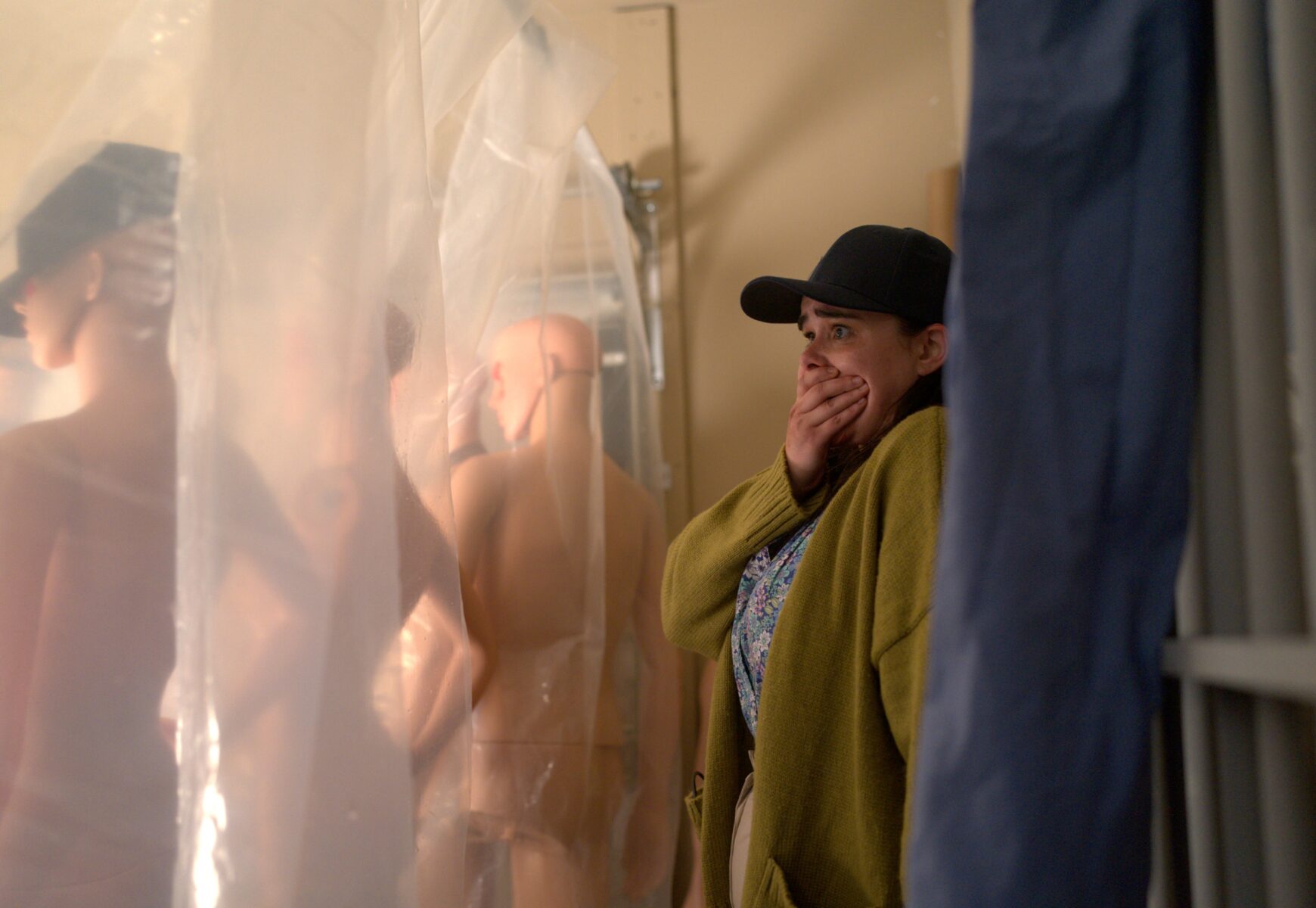
Enter Barbie Ferreira, the former Euphoria star also notorious for stepping away before its third and final season. In a complete 180 from Kat Hernandez, the body-conscious cam girl she is favoured as, Ferreira lands her first, unwonted lead as the unkempt final girl of the new Faces of Death. Kino website content moderator Margot Romero stumbles across a series of disturbing video uploads seemingly recreating deaths from the original film. As these clips multiply in size, Margot begins digging through the darkest corners of the internet. Engaging with impeccably designed Reddit forums, she is convinced that the murders are happening in real time.
Faces of Death is a fitting constellation of ready, contemporary internet mugs. Ferreira grew up online, so did co-star Charli xcx, an active TikTok user and all-around digital cultural phenomenon, who appears as Gabby, one of Margot’s coworkers. Co-lead Dacre Montgomery raised an entire generation of Netflix subscribers playing Billy Hargrove in Stranger Things, one of, if not the defining success stories of the streaming era. Even the film’s warped hyperpop soundtrack is engineered for the moment. A critique of the attention economy and an interrogation of the synthetic nature of real versus staged media, AI, edits and re-enactments, it talks the talk and walks the walk just like how society moves: so focused on the commercial platforms that drive and treat our own lifestyle trends and digital connectivity as currency.
“Growing up, I had the privilege and the curse of kind of being the guinea pig of the internet,” Ferreira chuckles. “I feel like I’m a zillennial; I used to think I was just pure Gen Z, but then the dates shifted, so now I’m cusp.” She speaks at a rapid rate, distracted by literal off-screen cat fights in her living room, trailing off on tangents before regaining her bearings with relatable, awkward glee. “I have the worst ADHD.” For someone promoting an extreme meta-slasher, she is the sweetest interviewee.
Ferreira views her life as “a really great research project” for Faces of Death. She remembers being seven years old on her dial-up Dell desktop, going on forums, blogging on LiveJournal, and playing Neopets on Xanga. Before she knew it, she’d accidentally click on something that would completely traumatise her forever. “Parents had no idea, so it was kind of like this Wild West of figuring out what to do with this mechanism that connects you with everyone around the world.” Much like Margot, Ferreira has spent most of her days staring into the abyss of a screen. She accepted Tumblr for what it was – a cesspool of black-and-white hashtag-depression gifs. At the same time, Instagram was happening, thus the advent of modern social media and all its harmful, inescapable algorithmic content.
But before apps like TikTok, there were prank links and shock sites that kept zillennials scrolling. “It was also during the era of having those links that would then bring you to a bunch of old guys having sex or something,” Ferreira recalls. She describes herself as a “very goth” teenager who also happened to be very familiar with Mondo cinema, a subgenre of the shockumentary kind giving prominence to taboo subjects. “The whole thing was like, ‘It’s banned, it’s so bad,’ and that’s so enticing to a 12-year-old who’s emo. I’m like, ‘Oh, my God, I could take it,’ you know?” During a time on the internet when shocking arthouse films were being dug up, transgressive nasties like Cannibal Holocaust became a digital rite of passage and spoke to Ferreira’s morbid interests. “I don’t necessarily love them, but I actually own Salò [or the 120 Days of Sodom] on DVD if anyone ever wants to borrow it.”
“I remember watching Cannibal Holocaust pretty young, and especially with the animal violence, to me that was the biggest thing. I was very familiar with the fact that they went to court to prove that they used practical effects. After the Hays Code was gone and everyone in the late 60s and 70s was making these insane films, and then how that resonated with more modern gory films, to me, I was very aware of what Faces of Death was; it’s a gore tape. I hadn’t watched it randomly, so I did when I got sent the script. What’s interesting is that it’s still fully relevant and only becoming [more] relevant as time goes by.”
The old mythology surrounding Mondo and Faces of Death survived on supposedly forbidden, supposedly real footage. Instead of asking the observer to believe what they are seeing, Goldhaber and Mazzei deliberately inserted real death footage in the opening snuff montage of their film. A very brief, blurry moment shows the case of a man mauled by a grizzly bear. It is altogether frightening, refusing to separate fiction from painful truth. “We’re all, as a society, trying to really figure out what to do with seeing so much violence and having so much information on your phone, your tablet, whatever it is that’s in your back pocket,” Ferreira says. “That’s really the message of the movie; it’s creating a cycle of attention and violence.”

Ferreira prepped by immersing herself in true-crime podcasts, found-footage videos, and horror movie favourites like The Hills Have Eyes, The Evil Dead, and The Poughkeepsie Tapes. Playing dark tourist for research purposes, she also spent time at New Orleans’ Museum of Death and Museum of Voodoo. Such an effective performance then from Ferreira, refashioned into the contrary of her being. Margot isn’t a hardened horror fan, or an internet sleuth. She is messy, burnt out, deeply troubled by the violence of her day-to-day and self-medicating with stimulants. Workplace concern becomes an obsession, not far removed from the average content moderation experience.
“Margot has problems; she’s not a perfect human. This is a job that a lot of people quit, it’s fast turnover. It’s pretty badly paid. From what I hear, usually people go in who can’t get hired in other places, maybe they have a felony, which could be an issue. It’s such a tough job that anyone who will do it.” Ferreira couldn’t speak directly to moderators, confidentiality agreements made that difficult, so she, of course, turned to the internet itself. “I watched a lot of YouTube, Soft White Underbelly, anonymous interviews. I love going on Reddit. I actually find that as an actress in the modern times, there’s so much material on the internet, direct from the source, that’s just so wonderful.”
To understand what Margot was absorbing, Ferreira asked Goldhaber to send her the violent material that would appear in Faces of Death. “He did not force me to watch them; I was like, ‘Just show me so I can act to this green screen on this laptop correctly.’ Watching a lot of violence, it was very icky, and it put me in a headspace too.”
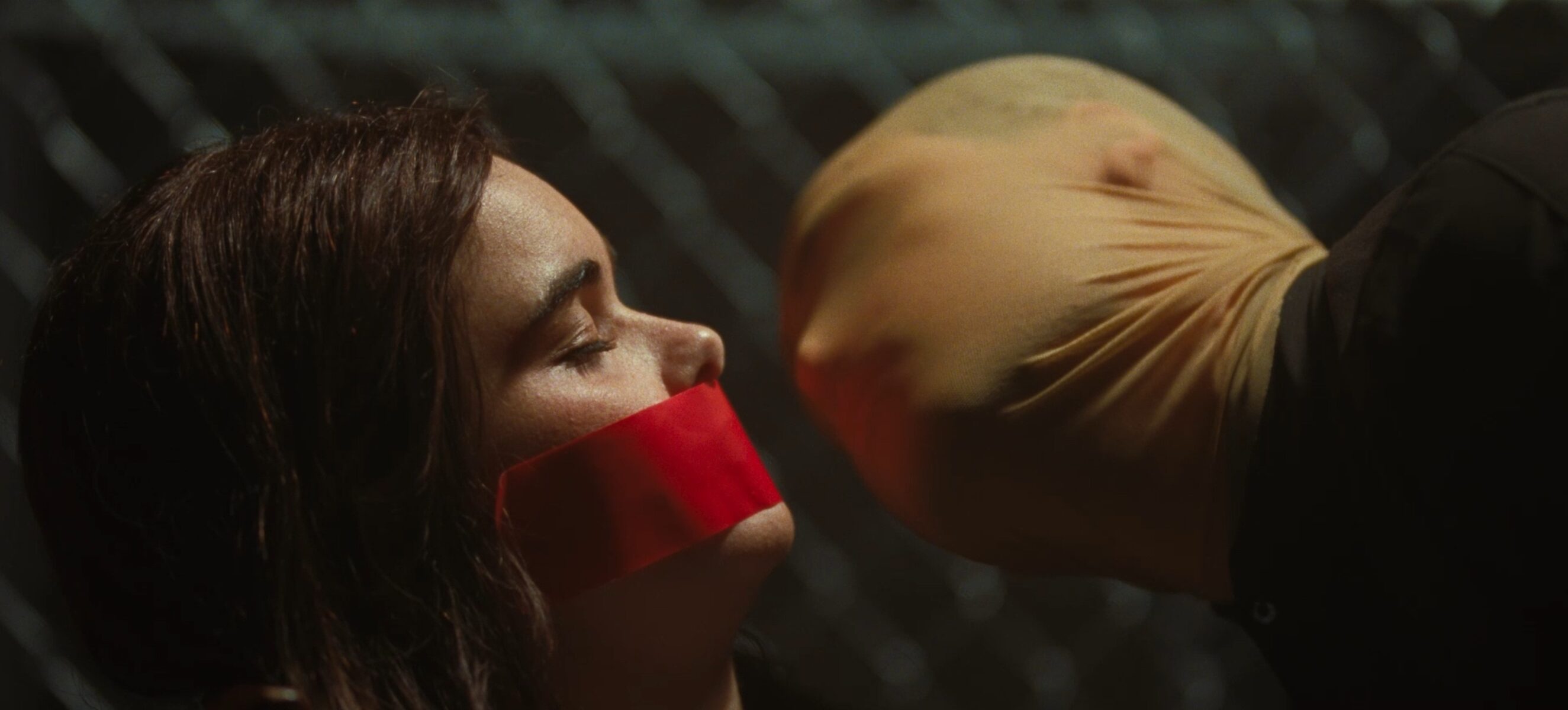
The most difficult aspect of making Faces of Death was also the most physical. So much familiar acting territory has been internal; another of her new films, Mile End Kicks, sees Ferreira as a music critic who becomes romantically involved with two members of an indie band. Suddenly, she had to fight. Role-playing a classic cat-and-mouse game with Montgomery as Arthur Spevak, a shotgun-wielding incel creator with blood-red contacts and slicked-back hair, “It was two full days of us stuck in a Louisiana garage,” Ferreira exposes. “You can’t walk around because you’re covered in blood, so it was really tough. I felt like an Olympic athlete.” She was so in it to the point where she came home covered in bruises and didn’t even notice. Her voice took a beating, too, from all the spontaneous final girl raging she lent. “It was just weird to be so physical in my acting; I haven’t gotten the opportunity to do action films or anything.”
Margot’s battle for survival served as an endurance test for Ferreira; it’s an appropriately old-school horror portrayal for such a modern film and mirrors Marilyn Burns as Sally Hardesty in 1974’s The Texas Chain Saw Massacre. “I wore a hat on Instagram the other day, and they were like, ‘Are you in the reboot?’ I’m like, ‘No, I just love the original…’ I don’t know if I have a favourite final girl, but I will say Paris Hilton in House of Wax, I love her and, like, honestly, really incredible cameo.”
When Faces of Death was shot, Charli xcx’s pivot into acting was unexpected news for her long-time friend. “I mean, I always knew that she loved film because of True Romance, that was the name of her first album, but I was just like, ‘Oh, my God, that’s so cool!’ I’m used to going to see her on stage with thousands of people screaming, and me being like, ‘ahhh!’” This technically makes it Charli’s first character credit, despite carrying the weight of a bunch of silver screen studies across 2026. “Filming a movie, it sounds way more glamorous than it is,” Ferreira jokes. “We’re in an office building, and I did have to do one scene where I had an anxiety attack. I was so embarrassed, like, ‘I’m just gonna go in the bathroom and get myself all sweaty. Sorry that I’m being weird.’”
There is no neat, definitive answer to the digital violence Faces of Death confronts, and Ferreira knows that better than most. She grew up with the internet; now she’s playing out what happens when it grows beyond our control. “How do we live in this digital age, and how do we protect ourselves during this time? It makes people, and myself, really introspective on how we interact with media, how we aren’t supposed to see all these things, and what happens when you do. It’s like you get driven into madness.”
Faces of Death is available on digital platforms now
Words – Douglas Jardim


